Children 6–9In schools now
First Moves
- Format
- 30 min · 6–8 weeks
- Setting
- School groups and small groups
Play, piece recognition, taking turns and short puzzles.
Request this programChess · Shared learning · Research
One board. Many possibilities.
Mukund Agarwal is bringing chess into school communities through shared lessons, hands-on practice and explanations in a familiar local language. What has begun with children is part of a wider ambition: to engage one million minds through meaningful play.
Already underway
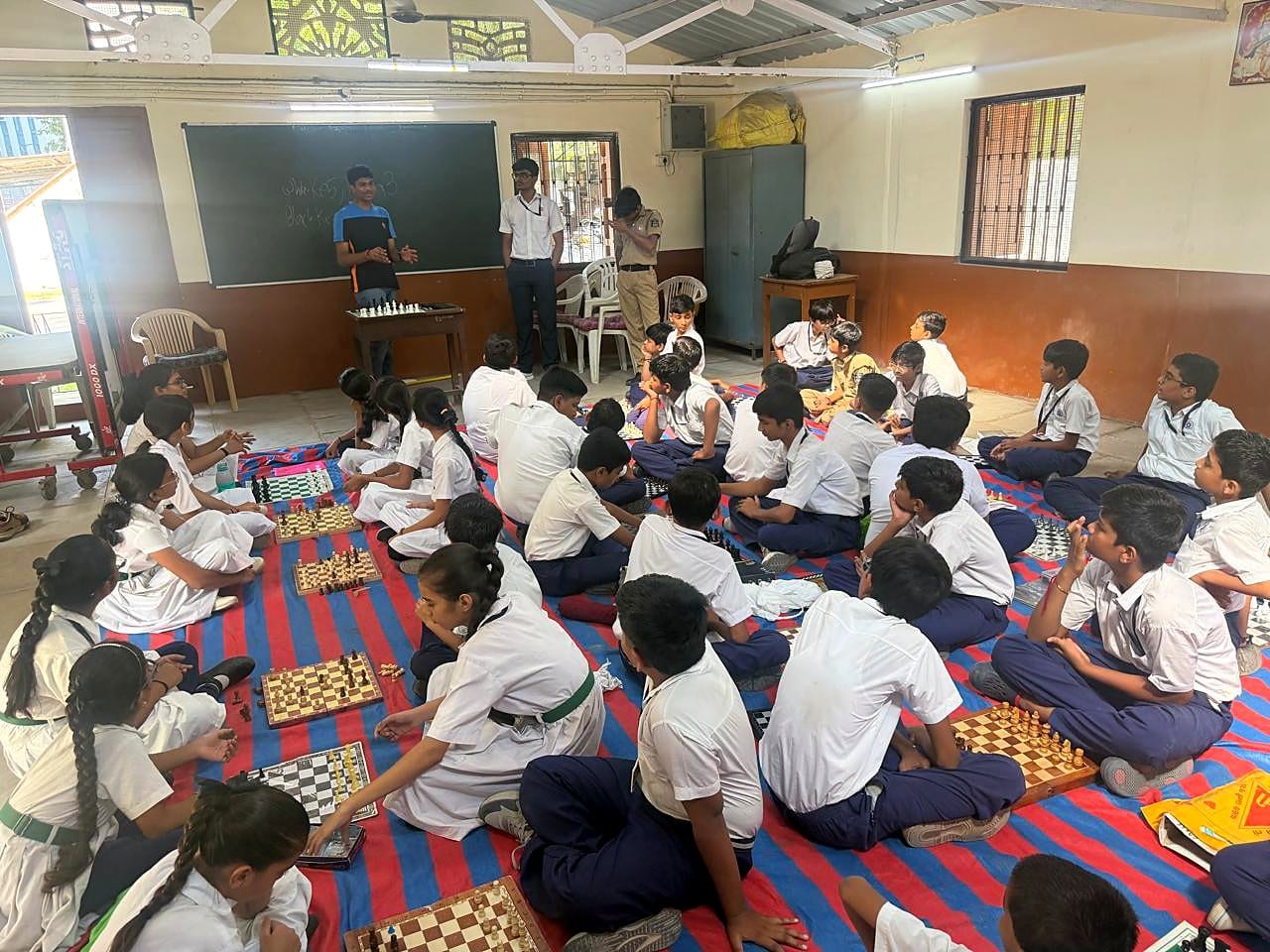
Million Minds is growing through in-person chess sessions with schoolchildren: group instruction, shared boards and guidance during practice.
Activity story
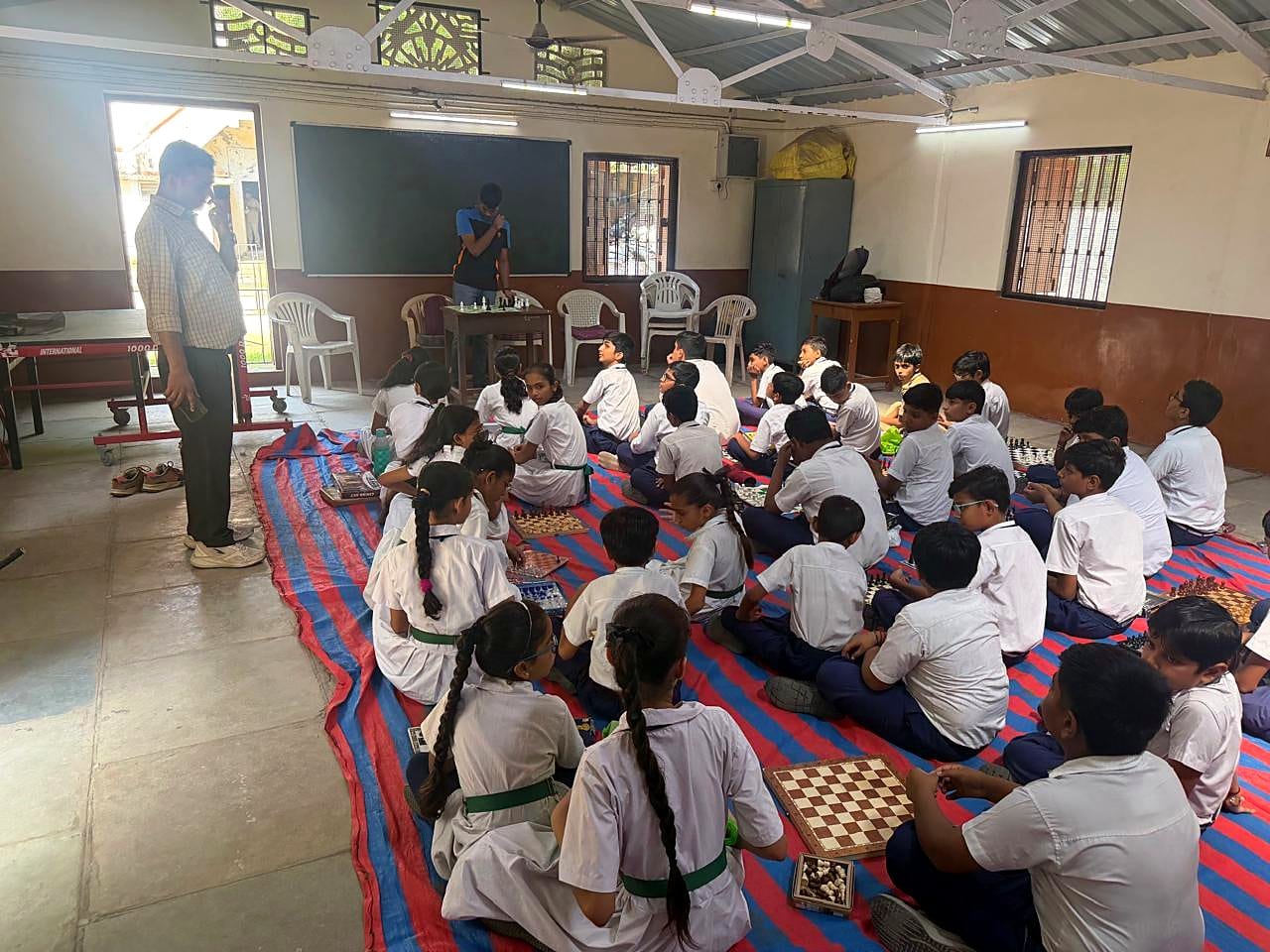
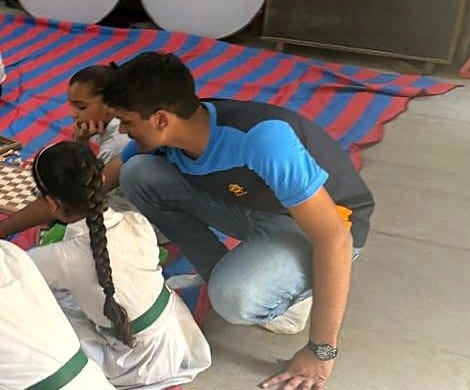
Children gather with physical chessboards for a shared learning session. A demonstration brings the group together; smaller groups then have space to explore the game, with Mukund offering guidance at the board.
Teaching method
The classroom approach combines shared instruction with time to try ideas on a real chessboard.
Explain in a familiar local language so children can follow and take part.
Use a shared demonstration to introduce an idea before children try it.
Bring children around physical boards to explore moves with their peers.
Spend time alongside smaller groups to help them work through a position.
Original classroom audio. Captions and an English translation will be added after review.
Programs by audience
School sessions are running now. Programs for other ages and communities are pilot designs we will build with suitable partners.
Play, piece recognition, taking turns and short puzzles.
Request this programPlanning, decision-making, practice games and reflection.
Request this programBeginner learning, an enjoyable challenge and social play.
Request this programHow participation works
A request starts a conversation. A coordinator checks suitability and capacity, then proposes a time that works in your timezone.
Pick your role and program, then send a short request by WhatsApp.
A coordinator checks the fit, group size, language and location.
We suggest a 30 or 60 minute slot, shown in your local time.
You accept, and our team confirms the session.
The session runs at your school, venue, home or online.
Attendance and feedback are recorded so the program keeps improving.
Sending a request does not book a session. Nothing is confirmed until a coordinator replies with a time and you accept it.
The founder
Mukund Agarwal, a FIDE Master, wants more people to experience chess as a way to learn, connect and enjoy a thoughtful challenge. His current school work is the starting point for a wider community initiative.
Learning from every program
Healthy minds are our aspiration. Research is how we find out what actually helps, starting with participation and feasibility before any claims about outcomes.
Chess gives structured practice in planning, attention and decision-making under rules.
Whether gains carry over to school results, memory or wellbeing is an open research question.
Who attends, who returns, what gets in the way, and how consistently sessions are delivered.
Are you a school, parent, community group or coach? Tell us whom you would like to involve and where. We can discuss a suitable session.